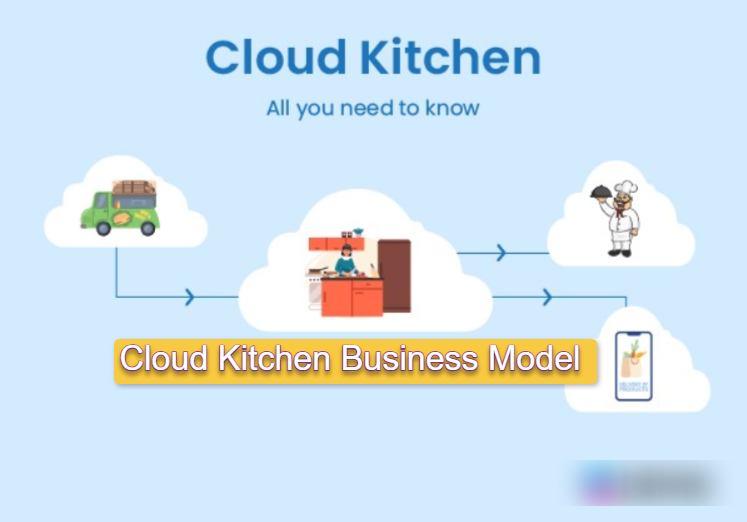
Cloud kitchen business model facilitates virtual restaurants without a brick-and-mortar restaurant. Most companies are engaged in making food for deliveries through online channels. Several food companies may utilize the same kitchen facility efficiently. This configuration can help businesses boost their output and cut down on infrastructure costs. The expansion of cloud kitchen is promoted by the growth of food ordering trends online in cities globally.
Boosting Efficiency by Delivering Food Quickly
Efficiency in food delivery is still a very critical aspect of cloud kitchen business model. The faster products are delivered, the more satisfied the customers become, and the more they return to order again. Cloud kitchens are usually located near high-demand urban areas for quicker service. Technology is also used in businesses to keep track of orders, handling them in real time and managing deliveries. By organizing kitchen operations, it is possible to cut down on the time needed for food preparation and reduce the delay in preparation effectively.
Cloud Kitchens and Operational Cost Cutting
One of the big benefits of cloud kitchen business model is the reduced operating cost. No dining areas, no expensive interior, no front desk staff operations are required for businesses. This can help to slash rental and maintenance costs quite a bit. Shared Kitchen Area also reduces the amount of infrastructure investment needed for new businesses. Businesses can prioritize food quality and effective service. The reduced operating costs enable cloud kitchen business models to provide competitive pricing and higher profit margins.
The Role of Kitchen Technology in Cloud Kitchens
In the present era, the technology in the kitchen is playing a significant role in the cloud kitchen business model. Digital systems are utilized in businesses for stock control, order processing, and the tracking of customers. Automated kitchen equipment also enhances the speed of production and consistency of food. Smart technologies can minimize the number of errors in operations and optimize the use of resources. Improved integration with technology enables seamless business processes and customer service experiences.
Popular Cloud Kitchens These Days
Today, there are several food delivery and restaurants companies that operate based on cloud kitchen systems. These companies specialize in virtual restaurants, efficient delivery and technology-based food services. They have scalable business models which can enable them to grow quickly across different locations.
Here is the list of some of the cloud kitchen business models
| Company Name | Short Description |
| Rebel Foods | Operates multiple virtual restaurant brands across cities. |
| FreshMenu | Uses cloud kitchens for online food delivery services. |
| Box8 | Runs delivery-focused kitchen operations and food brands. |
| Curefoods | Manages several virtual restaurant and delivery brands. |
| Kitchen United | Provides shared kitchen spaces for restaurant businesses. |
| Zomato | Supports online restaurant and cloud kitchen ecosystems. |
| Swiggy | Works with cloud kitchens and virtual restaurant brands. |
| EatClub | Operates delivery-only food brands across markets. |
| Ghost Kitchens | Provides delivery-focused restaurant kitchen operations. |
FAQs
Q1. What is Cloud Kitchen?
Ans: It is a kitchen area that doesn’t have a concrete dining area, yet it’s targeted at the conveyance.
Q2. What is the cost-saving aspect of a cloud kitchen?
Ans: It helps in cutting down on food costs and front-end costs.
Q3. What’s the significance of delivery efficiency in cloud kitchens?
Ans: Customer satisfaction and repeat orders are enhanced by fast delivery.
Q4. Are there any restrictions on operating more than one brand in a cloud kitchen?
Ans: Yes. A single restaurant kitchen can serve multiple brands of virtual restaurants.
Leave a Reply