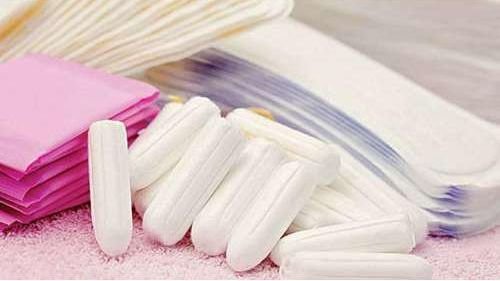
The advancing awareness about menstrual hygiene and women’s health combined with market opportunities creates profitable opportunities for starting a sanitary napkin business. Proper market investigation combined with an established business framework and appropriate business structure lays down the groundwork for business achievement. The foundation of a safe effective product relies on legal compliance management and quality-structured manufacturing operations combined with high-quality material acquisition.
Understanding the Market
Market research must be performed extensively before starting to launch a sanitary napkin business. The identification of target customer groups includes women from both urban and rural areas and students in educational institutions and healthcare facilities along with NGOs should be your priority. Research competitors who manufacture sanitary napkins at both national and local levels to discover their pricing approaches together with product variations and promotional plans. Examine consumer interest for sanitary napkins that comprise organic, biodegradable and ultrathin elements. Positioning your brand becomes more successful when you identify how your customers prefer to buy their products.
Creating a Business Plan
A business must have a properly organized business plan to achieve success. You should outline business targets together with your targeted market and product selection and pricing structure and marketing approach and financial tracking. Your business plan should include complete information on the raw material supply chain as well as both your production methods and your distribution system. The development of a business plan becomes necessary to obtain loans and grants and attract investment capital from investors. The business plan needs to resolve issues brought by regulatory compliance requirements as well as competition dynamics and supply chain complexity.
Choosing the Right Business Model
Your business can operate through two structural approaches either by making sanitary napkins directly or by purchasing them and placing your brand label on the products. The costs of producing on your own include buying equipment and ingredients whereas product delivery channels require your attention. If you want access to an established brand you can select the option to develop a franchise. Research both the financial expenses together with scalability aspects and profitability before settling on a specific business model.
Registering Your Business and Legal Compliance
You should register your business either as a sole proprietorship or partnership or as a private limited company based on your organizational size. You need to apply for all mandatory licenses which should include GST registration as well as FSSAI certification (when required) and a pollution control clearance. A product must get BIS Bureau of Indian Standards approval or approval from other local regulatory bodies to demonstrate quality standards. Following proper documentation alongside legal norms compliance will protect you from potential fines and legal issues.
Setting Up the Manufacturing Unit
Select a site for your manufacturing establishment that enables access to water supply and transportation as well as electricity services. The number of sanitary napkin-making machines you should buy will depend on your output capacity. The performance of fully automatic machines surpasses that of semi-automatic machines because they offer higher efficiency but semi-automatic machines help lower the start-up costs. The business needs to recruit professionals who will work on production and packaging alongside performing quality tests.
Sourcing Raw Materials
Standard raw materials must be used as they create comfortable and functional sanitary napkins. The main components for sanitary pads consist of absorbent cores made from either pulp or SAP or cotton materials as well as non-woven fabric and adhesive strips and polyethylene back sheets and packaging materials. Your business success depends on your ability to establish partnerships with vendors who provide both high-quality materials at competitive pricing levels.
Product Development and Quality Control
Create sanitary napkins which fulfill consumer requirements for absorption power and user comfort and skin-friendliness. Testing different designs and dimensions and thickness levels has to be conducted as part of trials. Absorbency tests must accompany adhesive strength examination and skin irritation evaluations among the quality control procedures.
Branding and Packaging
Building a strong brand identity enables your sanitary napkins to stand apart from other companies in the market. A distinctive brand name together with an appealing logo should be selected while packaging must achieve aesthetically pleasing designs. The packaging should provide informative content while being environmentally friendly and well concealed. Promote essential product characteristics which include leak-resistant protection as well as rash-free materials and biodegradable solutions.
Marketing and Sales Strategy
Create a strategic marketing approach which combines internet-based promotion with conventional marketing methods for your sanitary pads. The business should leverage social media platforms with influencer marketing by partnering with women’s health organizations. You should provide samples at educational institutions and work environments to boost awareness of your sanitary product. To acquire first-time buyers set affordable prices together with special deals.
Scaling and Expanding the Business
Business expansion should become your priority after your enterprise demonstrates market success through steps that include growing production capability and launching different product versions as well as market entry into new areas. Support rural sanitary napkin distribution by collaborating with organizations working with non-governmental bodies and government programs. Your company should evaluate exporting to overseas markets since they need low-cost menstrual hygiene products.




Leave a Reply